
Enhance Learning with LMS Data Analytics
Maximizing Learning Outcomes with LMS Analytics
In today's digital age, education is evolving rapidly. Learning management systems (LMS) are at the forefront of this transformation. They offer a centralized platform for delivering educational content. But how can we ensure these systems are used effectively?
Enter learning management system analytics. These analytics provide valuable insights into student engagement and performance. They help educators tailor their teaching strategies to meet individual needs.
Data analytics for learning management systems can optimize course content and delivery. By analyzing data, educators can identify at-risk students early. This allows for timely interventions to improve outcomes.
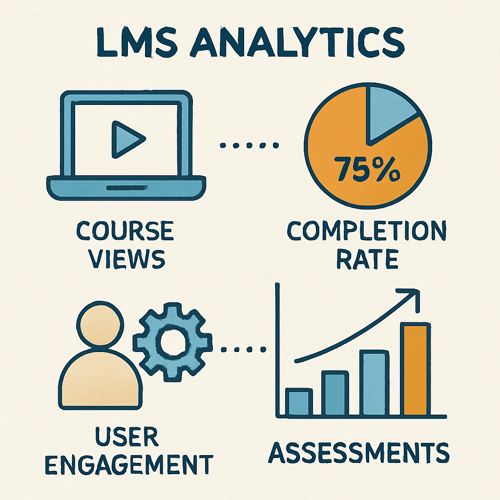
LMS reporting tools offer detailed insights into learner activity. They track course completion rates and assessment results. This data is crucial for enhancing personalized learning experiences.
LMS learning analytics can also measure the effectiveness of instructional strategies. Real-time data from LMS tracking and reporting informs timely decision-making. This empowers educators to make data-driven decisions.
Integrating LMS analytics with other educational data systems provides a comprehensive view of student learning. This holistic approach supports continuous improvement in educational settings.
Understanding Learning Management System Analytics
Learning management system (LMS) analytics provides a wealth of information. This data helps educators and institutions make informed decisions. But what exactly does LMS analytics entail?
At its core, LMS analytics involves collecting and analyzing data from online learning environments. It tracks user interactions within the system, detailing how content is accessed and used.
Instructors gain insights into which resources students use and their engagement levels. These insights are essential for improving course materials and teaching methods.
Key data points in LMS analytics include:
- Learner progress and attendance
- Assessment scores and completion rates
- Engagement levels (time spent on tasks)
- Interaction types and frequency
For educators, understanding these metrics is crucial. They highlight areas for potential improvement. This leads to a more effective learning experience for students.

By leveraging these analytics, institutions can enhance educational strategies. Ultimately, LMS analytics bridges gaps in learning and teaching. It provides a pathway to smarter, data-informed decisions, ensuring optimal learning outcomes.
What Your LMS Data Actually Contains
Before choosing metrics, it helps to know what an LMS records in the first place, and what each kind of record can and cannot tell you. Most platforms, including Moodle and Totara, capture broadly the same data:
| LMS data | What it can tell you | What it cannot |
|---|---|---|
| Enrollments | Who was assigned or signed up, and when | Whether they should have been |
| Completions | Who finished, and how long it took | Whether they can now do the thing the course taught |
| Grades and attempts | Which questions and topics learners struggle with | Why they struggle |
| Activity logs | Which resources are opened, and where learners drop out | Whether an open page was read |
| Forum and discussion activity | Who participates, and how often | The quality of the contribution |
| Certifications | Who holds a credential, and when it expires | Anything issued outside the LMS |
Two limits catch most teams out. First, detailed activity logs are often kept for a limited period, so the history you need for a trend may already be gone. Second, an LMS only knows about the LMS: roles, reporting lines, revenue and on-the-job performance live elsewhere. Good LMS data analytics starts by being clear about which questions the LMS can answer on its own.
For which of these metrics matter to which role, see our guide to learning analytics, and for why raw time spent is a weaker signal than it looks, see what time spent learning actually means.
How Far LMS Data Can Take You: From Reports to Predictions
Analytics is often described in four levels: describing what happened, diagnosing why, predicting what will happen, and recommending what to do. LMS data supports each level to a different degree.
- Describing what happened is where LMS data is strongest. Completion, enrollment and grade reports come straight out of the platform, and most built-in report builders handle them well.
- Diagnosing why means drilling from a summary into activity logs and assessment attempts: which module learners leave at, which question most of them miss. The data is there, but it usually takes a custom report to reach it.
- Predicting learners at risk needs history, which is where log retention matters. A model is only as good as the trend data behind it, and many LMS installations do not keep enough of it by default.
- Recommending next steps usually needs data from outside the LMS as well, such as role, performance or credential status, so it is rarely something LMS data can do on its own.
The practical takeaway: most teams get the quickest return by doing the first two levels well with the data they already have, and by starting to keep history now if they expect to want predictions later.
Benefits of Leveraging LMS Analytics for Learning Outcomes
The application of LMS analytics can transform educational environments. By utilizing analytics, educators gain insights that drive meaningful learning outcomes.
Through data-driven decision-making, educators can personalize learning experiences. Tailoring instruction to individual needs enhances student engagement and achievement.
LMS analytics also helps in identifying students who may require additional support. Early intervention can lead to improved academic success and retention rates.
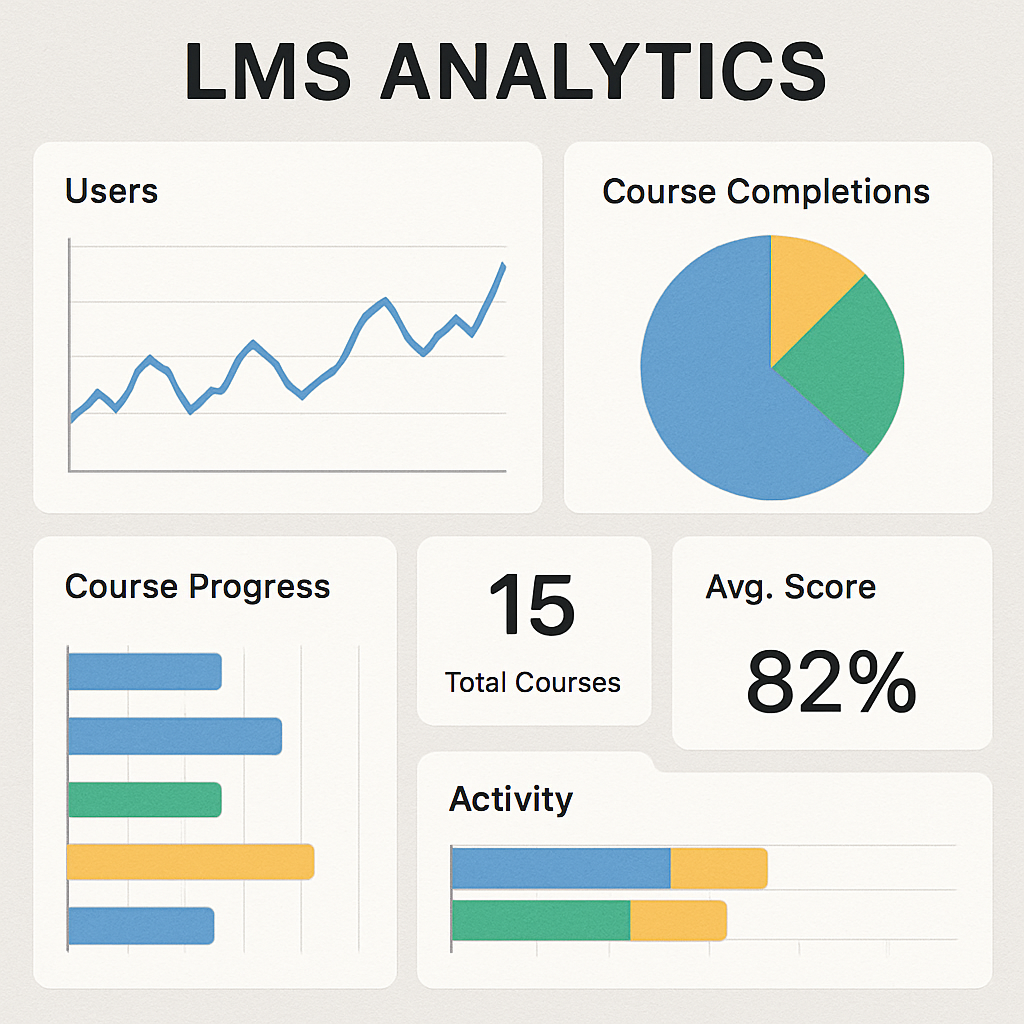
Moreover, the visual dashboards simplify complex data for educators. These tools enable quick interpretations, leading to timely and informed educational strategies.
Key benefits of LMS analytics include:
- Personalization of learning experiences
- Early identification of at-risk students
- Enhanced academic performance through data insights
- Simplified data interpretation through visual tools
LMS analytics also fosters a culture of continuous improvement. By regularly assessing learning strategies, educators can refine their approaches for better outcomes.

This data-centric approach ensures that instructional methods remain relevant and effective. Leveraging LMS analytics leads to a more dynamic and responsive educational environment. As a result, institutions can better meet the diverse needs of their learners, paving the way for long-term educational success.
How to Use LMS Reporting and Data Analytics Effectively
To make the most of LMS reporting and data analytics, it's crucial to start with clear objectives. Define what you want to achieve with data insights.
Begin by selecting the right metrics that align with your goals. Focus on data that contributes directly to learning improvements.
Use data visualization tools within your LMS for better understanding. These tools help translate data into actionable insights through graphs and charts.
Consider leveraging customizable reports to emphasize specific areas of interest. Personalized reports support targeted strategies for educational enhancement.
Steps for Effective Use:
- Identify clear objectives for using LMS analytics.
- Select key metrics relevant to these goals.
- Use visualization tools for data clarity.
When analyzing data, involve educators, IT specialists, and administrators. Collaboration enhances interpretation and strategic decision-making.
Key Practices:
- Regularly review analytics to track progress.
- Encourage a data-driven culture among educators.
- Integrate findings into curriculum development.

Real-time data access in LMS systems supports prompt educational interventions. These insights are invaluable for adapting teaching methods to current learner needs. As you explore LMS analytics, remember the potential for continuous improvement in educational practices. By effectively using reporting tools and analytics, educators can optimize learning outcomes with informed, strategic actions.
Best Practices for LMS Tracking and Reporting
To maximize the effectiveness of LMS tracking and reporting, consistency in usage is key. Regularly updating data ensures accuracy and up-to-date insights.
Incorporate user training for effective data interpretation. Educators need to understand how to glean actionable insights from complex datasets.
Pay attention to customizing reports to focus on institutional goals. Tailored reports offer more relevant information that can drive targeted improvements.
Implement feedback loops to refine analytics processes. Continuous improvement in tracking methods enhances both teaching and learning experiences.
Key Practices:
- Maintain data integrity through regular updates.
- Offer training sessions for educators on data usage.
- Customize reports to align with goals.
- Establish feedback mechanisms for refinement.
Emphasize transparency in reporting practices to foster trust within the institution. Clear communication of findings encourages buy-in from all stakeholders.
Finally, balance the need for data with respect for privacy. Adhere to ethical standards when handling student information and strive for a secure data environment. By prioritizing these practices, institutions can leverage LMS tracking and reporting to drive substantial educational advancements.
Integrating LMS Analytics with Other Educational Data Systems
Integrating LMS analytics with broader educational data systems enhances holistic learning views. When combined, these systems offer comprehensive insights into student performance.
Connectivity among diverse data sources improves analysis accuracy. Seamless integration allows educators to compare LMS data with other institutional metrics.
Interoperability is crucial for effective integration. Systems must communicate efficiently to ensure data consistency and reliability.
Key Integration Benefits:
- Unified data view across platforms.
- Improved consistency and accuracy.
- Enhanced insights for decision-making.

This integration supports a more rounded understanding of student needs. With unified insights, educational institutions can make informed, strategic decisions.
Finally, leveraging combined data can help in resource optimization. Institutions can identify trends and allocate resources more effectively, benefiting students and educators alike.
Whether that joining is best done with built-in LMS reporting, a BI tool or a dedicated platform depends on how many systems your questions cross. Our buyer's reference on choosing a learning analytics platform walks through that decision.
Overcoming Challenges: Data Privacy, Security, and Interpretation
Data privacy in LMS analytics is a growing concern. Protecting student information is vital for maintaining trust and compliance.
Security measures must be robust. Regular audits and data encryption are essential safeguards against data breaches.
Interpreting data accurately can be another challenge. Educators require training to analyze complex datasets effectively.
Key Strategies for Addressing Challenges:
- Implementing advanced encryption techniques.
- Conducting frequent security audits.
- Providing training for data interpretation.
Privacy policies should be clear and accessible. Educators and students need to understand data usage rights and protections.
Lastly, collaboration between IT teams and educators enhances security protocols. This cooperation ensures that data privacy and interpretation challenges are managed effectively. Proper governance and strategy empower institutions to maximize LMS analytics benefits while protecting valuable data.
The Future of LMS Data Analytics: Trends and Innovations
The landscape of LMS data analytics is rapidly evolving. Emerging technologies and methodologies promise exciting advancements in education.
Artificial Intelligence (AI) is playing a crucial role. AI in LMS analytics automates data collection, offering predictive insights and streamlined processes.
Furthermore, the integration of gamification analytics is gaining momentum. It enhances motivation by analyzing engagement levels and optimizing learning paths.
Key Trends and Innovations:
- Increased use of AI for personalized learning.
- Enhanced mobile analytics for learning on the go.
- Gamification and engagement analytics to boost motivation.
Another trend is the rise of mobile learning analytics. With increasing smartphone use, capturing learning data on mobile platforms becomes critical.
Finally, user-friendly data visualization tools are becoming standard. They simplify complex analytics, making insights accessible to non-technical educators.
These trends signify a future where LMS analytics becomes more intuitive and impactful. As technological advancements continue, educational institutions can expect more adaptable and effective learning environments.
Conclusion: Taking Action with LMS Analytics
Harnessing the power of LMS analytics can transform educational outcomes. By leveraging these insights, educators can refine their teaching strategies.
Implementing effective LMS reporting and analytics fosters a data-driven culture. It enables institutions to enhance learning experiences and optimize resources.
To truly benefit, stakeholders must collaborate effectively. Training and support are crucial for maximizing the potential of LMS tools. Through collective effort, educational institutions can achieve significant improvements in learning outcomes and operational efficiency.