%20(1).svg)
Every learning platform can enrol a person in a course. The harder problem in a large organisation is knowing who that person is: which site they work at, which role they hold, who they report to, and what that means for the training they need this month. Get that wrong and administrators end up enrolling people by hand, chasing managers for lists, and fixing compliance gaps after an audit finds them.
Totara LMS answers this with two features that work together. Hierarchies describe how your organisation is structured. Audiences group people by rules, so learning follows them automatically as their circumstances change. This guide explains both, how they connect, and where each one stops.
Hierarchies: a map of your organisation inside Totara
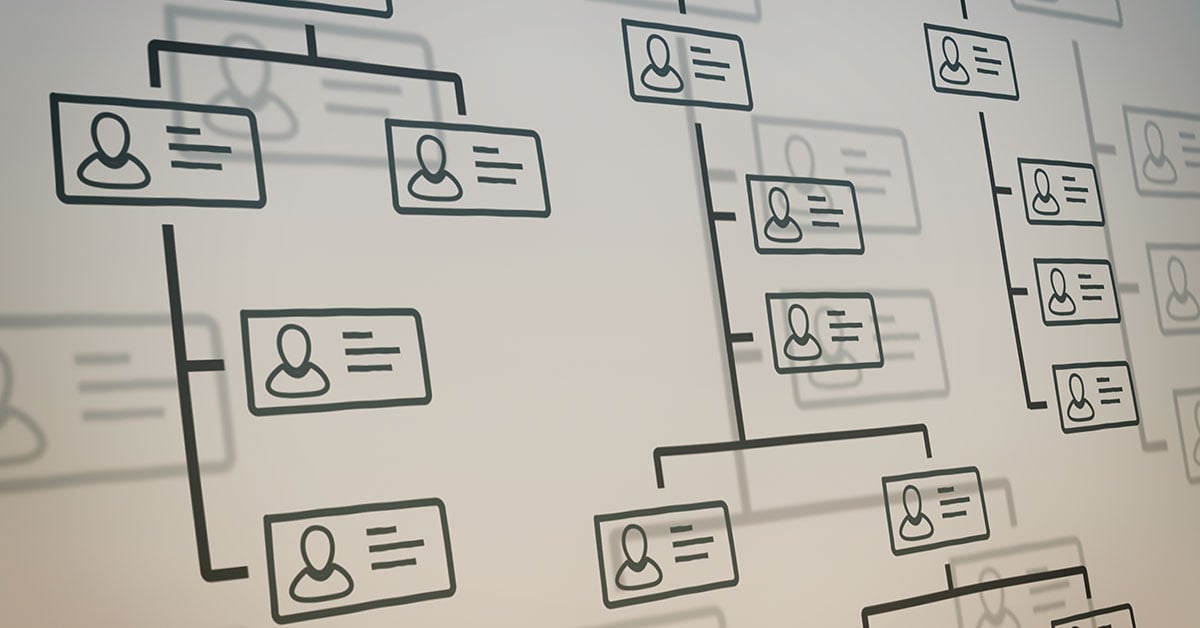
A hierarchy in Totara is a structure you build to reflect the real shape of your organisation. There are two kinds.
Organisation hierarchies describe where people sit: regions, sites, departments, business units, teams. A health system might model its hospitals, then the units inside each hospital.
Position hierarchies describe what people do: role families and the roles within them, such as clinical staff, then registered nurse, then charge nurse.
Totara supports multiple organisational structures and multiple positional structures, so you are not forced to pick one view of the organisation. A company that reports by geography for operations and by business line for finance can hold both.
Hierarchies can be created and updated in bulk, and kept current through an update from your HRM system. That last point matters more than any other. A hierarchy that is maintained by hand drifts out of date within months, and every rule built on top of it drifts with it.
In Totara Perform, the same hierarchy data supports skills frameworks, so skills can be assigned by position or organisation as well as by audience.
Job assignments: how a person connects to the map
A job assignment links a user to a position, an organisation and a manager. It is the bridge between the people in Totara and the structure you have built.
Totara supports multiple job assignments and multiple managers for the same person. This reflects how work actually happens in many organisations:
- A nurse who works shifts at two hospitals holds two job assignments, each with its own site and its own manager.
- An association staff member who leads one programme and supports another reports to two people.
- A contractor placed across two business units appears correctly in both.
Because manager relationships come from job assignments, they drive what managers see. Team management in Totara gives managers a team overview dashboard, team statistics, alerts and tasks, team reporting, learning plan oversight and seminar attendance approval, all scoped to the people who report to them.
Audiences: groups that maintain themselves
An audience is a group of users that you can attach learning and access to. Totara offers two types.
Set audiences are fixed lists. You add and remove members yourself. They suit small, stable groups such as a project team or a pilot cohort.
Dynamic audiences are defined by rules, and their membership updates automatically. When someone's data changes so that they meet the rules, they join. When they stop meeting the rules, they leave. Before you save a rule change, the update preview shows how membership will change, which is the safeguard against a rule edit quietly enrolling or removing hundreds of people.
A dynamic audience works like a smart playlist rather than a hand-built one. You describe what belongs in it once, and it keeps itself current.
Rules draw on the same data your hierarchies and job assignments hold: position, organisation and user profile fields. This is why the hierarchy work comes first. The quality of your audiences can never be better than the quality of the data they read.
What you can do with an audience
Once an audience exists, it becomes the unit you assign things to. In Totara Learn, an audience can control:
- Visibility of courses, programs and certifications, so people see the catalogue that applies to them
- Enrolment in courses, programs and certifications
- Assignment of learning plans
- Assignment of certifications for compliance, which can also be assigned by organisation or position
- Access to dashboards
- Access rights
- Which main menu items a person sees
- Membership of collaborative workspaces
- Open Badges awarded on audience membership
- Access restrictions on individual activities
In Totara Perform, audiences can also assign skills and determine who may give peer skills ratings.
The effect is that one well-built audience replaces a long list of manual tasks. When a new hire's record arrives from HR with a position and a site, the right audiences pick them up, and their onboarding program, their compliance certifications, their dashboard and their catalogue follow without an administrator touching the account.
How the pieces fit together: an example
Consider a regional health organisation onboarding clinical staff across several sites.
- The HRM system updates Totara with the new employee's position, organisation and manager. Totara records this as a job assignment.
- A dynamic audience with rules for clinical positions picks the person up.
- That audience is assigned the clinical onboarding program and the mandatory certifications, with recertification handled by Totara's certification management.
- Their manager sees the new team member on the team dashboard, along with outstanding learning and seminar approvals.
- Six months later, the employee moves to a second site in a new role. HR updates the record. Audience membership changes, new requirements are assigned, and requirements that no longer apply fall away.
No step in that sequence requires an administrator to enrol anyone manually. The administrator's work moved upstream, into designing the hierarchy and writing the rules.
Reporting by the shape of your organisation
Because every learner is attached to a position and an organisation, Totara's report builder can filter and compare results along those same lines: completion by site, overdue certifications by role, progress by manager. Reports can be scheduled and are scoped to what the viewer is allowed to see.
Totara's reports answer questions about learning inside Totara. When learning data has to be joined with HR, CRM or revenue data, Lambda Learning adds Zoola Analytics as the reporting layer on top.
Where audiences and hierarchies stop
These features are powerful, and they are also easy to over-engineer. Four limits worth knowing before you design:
Audiences are not a separation boundary. If you train several client organisations or member groups on one site and each needs its own branding, administrators, login page and private data, that is a job for Totara's multitenancy, not for audiences.
Dynamic audiences depend on clean data. A missing position or an out-of-date manager field means someone is silently left out of required training. An HRM update feed and a periodic data check are part of the design, not an afterthought.
Rule sprawl is real. Organisations that create an audience for every request end up with hundreds of overlapping groups that nobody can explain. A small set of audiences built around roles and sites, documented, usually outperforms a large set built around individual courses.
Set audiences go stale. They are right for fixed groups and wrong for anything that should track employment changes.
Getting the design right
Most of the value in audiences and hierarchies is decided before anyone configures a rule: which structures to model, what the HRM system can reliably supply, how job assignments should handle people with more than one role, and which assignments should be automatic. Changing a hierarchy after thousands of users and rules depend on it is possible, and it is far more work than getting it right at the start.
This is the part of a Totara implementation where a partner earns its fee. Lambda Learning designs hierarchy and audience structures as part of every Totara deployment, including the HRM integration that keeps them current. At Huron Perth Healthcare Alliance, four partner hospitals in Ontario run managed Totara with Zoola Analytics, with hundreds of hours recovered annually. Read the case study.
See how Totara would map your organisation
Bring your org chart, or do not. We will walk through how your structure and your compliance requirements would translate into hierarchies and audiences, and if Totara is not the right fit for you, we will say so.
Totara is a registered trademark of Totara Learning Solutions Ltd. Lambda Learning Inc. is a Totara Platinum Partner.
.svg)
%20(1).svg)